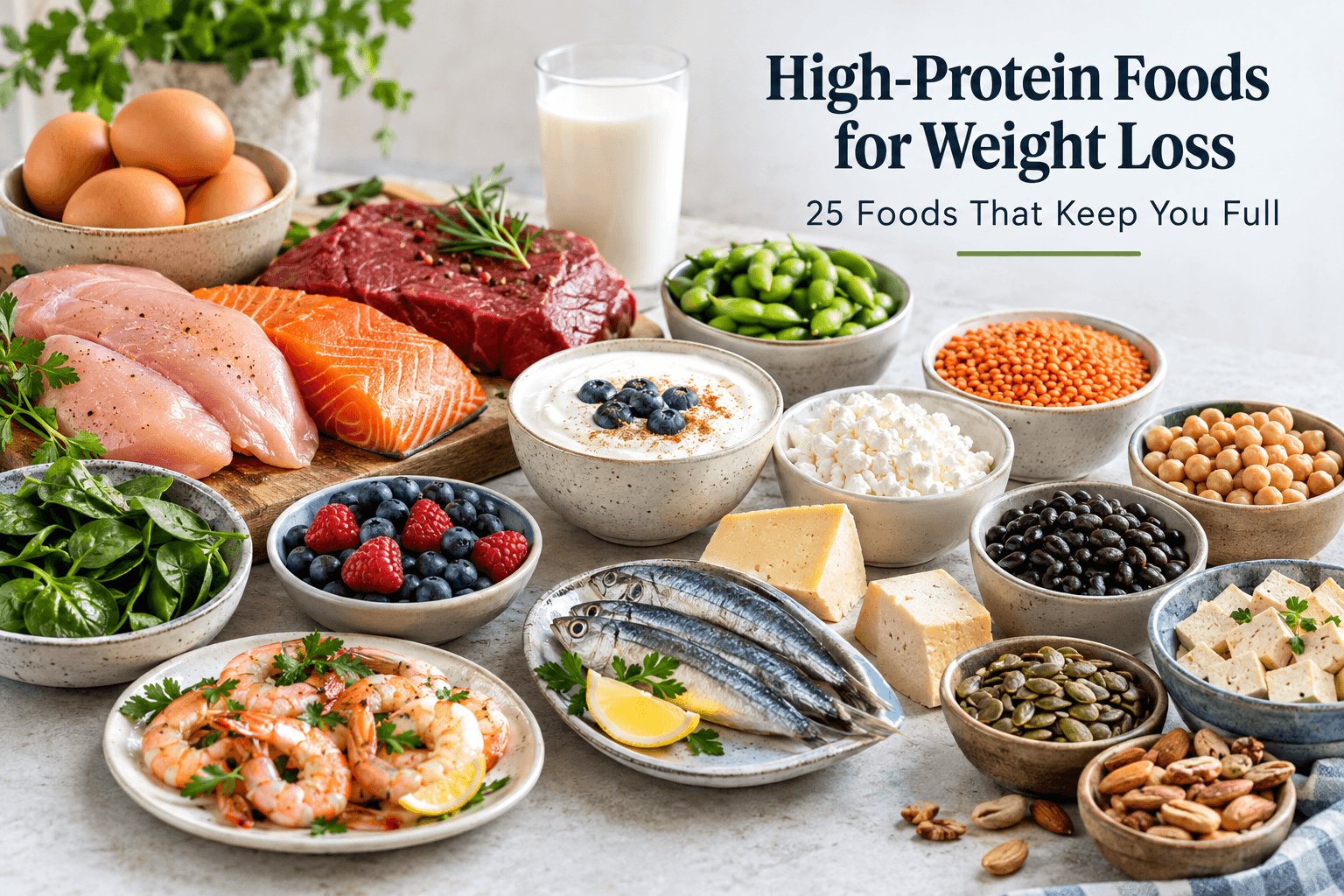
If you’re trying to lose weight, protein deserves a place near the top of your nutrition priorities.
High-protein foods can help you feel fuller after eating, preserve muscle while you’re losing body fat, and make it easier to stick to a calorie-controlled diet. But not every high-protein food is equally useful for weight loss. Some provide a lot of protein for relatively few calories, while others combine protein with substantial amounts of fat or carbohydrates.
So which foods should you actually choose?
In this guide, we’ll look at 25 high-protein foods for weight loss, including meat, fish, dairy, eggs, legumes and plant-based options. We’ll also look at how much protein they provide and how to choose the most filling options.
Why Is Protein Important for Weight Loss?
Weight loss ultimately requires a sustained calorie deficit: you need to consume fewer calories than your body uses over time.
However, how you create that calorie deficit matters.
Protein can make a calorie-controlled diet easier because it tends to be more filling than carbohydrates or fat. A high-protein diet can also help reduce the amount of lean muscle you lose during weight loss, particularly when combined with resistance training.
Protein also has a relatively high thermic effect of food (TEF). Your body uses energy to digest and process the food you eat, and protein requires more energy to process than carbohydrates or fat.
That doesn’t make protein a magic weight-loss food. But it can be a useful part of a diet designed for fat loss.
How Much Protein Do You Need When Losing Weight?
There isn’t one perfect protein target for everyone.
Your needs depend on factors such as body weight, age, activity level, training and your calorie intake.
For people who are actively trying to preserve muscle while losing weight, a daily intake somewhere around 1.2–2.0 grams of protein per kilogram of body weight is commonly used as a practical range, with higher intakes sometimes useful during aggressive calorie restriction or resistance training.
For example:
| Body weight | 1.2 g/kg | 1.6 g/kg | 2.0 g/kg |
|---|---|---|---|
| 60 kg | 72 g | 96 g | 120 g |
| 70 kg | 84 g | 112 g | 140 g |
| 80 kg | 96 g | 128 g | 160 g |
| 90 kg | 108 g | 144 g | 180 g |
| 100 kg | 120 g | 160 g | 200 g |
You don’t necessarily need to hit the highest number.
For many people, simply increasing protein while maintaining an appropriate calorie intake can make a weight-loss diet easier to follow.
25 High-Protein Foods for Weight Loss
The foods below are ranked broadly according to how useful they can be in a calorie-controlled diet. Protein and calorie values are approximate and vary between brands and preparation methods.
1. Chicken Breast
Protein: ~31 g per 100 g
Calories: ~165 kcal
Chicken breast is one of the classic high-protein foods for weight loss.
It provides a large amount of protein for relatively few calories and is extremely versatile. You can grill it, roast it, stir-fry it or add it to salads.
If you’re trying to maximize protein while keeping calories under control, skinless chicken breast is particularly useful.
2. Turkey Breast
Protein: ~29 g per 100 g
Calories: ~135 kcal
Turkey breast is another lean source of animal protein.
It is particularly useful for sandwiches, salads, wraps and meal-prep dishes. Look for minimally processed turkey rather than relying heavily on processed deli meats.
3. Tuna
Protein: ~25–29 g per 100 g
Calories: ~130–150 kcal
Tuna provides a lot of protein without many calories.
Canned tuna is also convenient and inexpensive, making it an excellent option for quick lunches.
Choose tuna packed in water if you’re specifically trying to minimize calories.
4. Shrimp
Protein: ~20–24 g per 100 g
Calories: ~100 kcal
Shrimp is unusually protein-dense.
Because it contains relatively few calories, you can eat a substantial portion while still keeping the meal relatively light.
Try combining shrimp with vegetables, salad or a modest serving of rice or potatoes.
5. White Fish
Examples include cod, haddock and pollock.
Protein: ~18–24 g per 100 g
Calories: ~80–120 kcal
White fish is one of the easiest ways to increase protein without adding many calories.
It’s particularly useful if you’re trying to create large, satisfying meals while maintaining a calorie deficit.
6. Greek Yogurt
Protein: ~8–10 g per 100 g
Calories: ~60–120 kcal
Greek yogurt can be an excellent high-protein breakfast or snack.
However, the nutritional profile varies considerably between products.
A low-fat or fat-free Greek yogurt can provide a particularly high amount of protein relative to calories. Full-fat Greek yogurt contains more calories but can also be very filling.
Choose unsweetened yogurt and add fruit yourself if you want to control added sugar.
7. Cottage Cheese
Protein: ~11–13 g per 100 g
Calories: ~80–110 kcal
Cottage cheese is another convenient high-protein dairy food.
It works well as a snack, breakfast or addition to a savory meal.
You can combine it with berries for a sweet option or tomatoes, cucumber and herbs for a savory alternative.
8. Eggs
Protein: ~6–7 g per large egg
Calories: ~70–80 kcal
Eggs provide high-quality protein along with vitamins, minerals and healthy fats.
They aren’t as protein-dense as chicken breast or white fish, but they can be extremely useful because they’re versatile and satisfying.
A breakfast containing eggs can also make it easier to build a protein-rich first meal.
9. Lean Beef
Protein: ~25–27 g per 100 g
Calories: ~150–220 kcal
Lean beef provides plenty of protein as well as iron, zinc and vitamin B12.
The calorie content varies considerably depending on the cut.
For weight loss, choose leaner cuts and pay attention to portion size.
10. Lean Pork
Protein: ~25–27 g per 100 g
Calories: ~150–200 kcal
Lean pork, particularly pork tenderloin, can be an excellent protein source.
It is often overlooked in favor of chicken, but a lean pork cut can provide a similar amount of protein.
11. Salmon
Protein: ~20–22 g per 100 g
Calories: ~200 kcal
Salmon is more calorie-dense than white fish because it contains considerably more fat.
That isn’t necessarily a disadvantage.
Salmon provides omega-3 fatty acids and can be part of a healthy weight-loss diet. The key is portion size.
12. Sardines
Protein: ~24–25 g per 100 g
Calories: ~200 kcal
Sardines provide protein, omega-3 fatty acids and several micronutrients.
Like salmon, they’re relatively calorie-dense, so they’re not necessarily the most efficient choice if your only goal is maximum protein for minimum calories.
But nutritional quality matters too.
13. Skyr
Protein: ~10–11 g per 100 g
Calories: ~60–70 kcal
Skyr is an Icelandic-style cultured dairy product that is naturally high in protein.
It’s particularly useful for people who want a high-protein snack without consuming many calories.
Add berries, cinnamon or a small amount of nuts for extra flavor.
14. Edamame
Protein: ~11–12 g per 100 g
Calories: ~120 kcal
Edamame is one of the more protein-rich plant foods.
It also provides fiber, making it particularly interesting for weight loss.
Frozen edamame is convenient and can be added to salads, stir-fries or rice bowls.
15. Lentils
Protein: ~9 g per 100 g cooked
Calories: ~115 kcal
Lentils combine protein with a substantial amount of dietary fiber.
That combination can make them particularly filling.
They aren’t as protein-dense as meat or dairy, but they can be an excellent part of a plant-based weight-loss diet.
16. Chickpeas
Protein: ~9 g per 100 g cooked
Calories: ~165 kcal
Chickpeas provide protein, fiber and carbohydrates.
They’re more calorie-dense than vegetables but can still be very useful for weight loss because of their combination of nutrients and satiety.
17. Black Beans
Protein: ~8–9 g per 100 g cooked
Calories: ~130 kcal
Beans are a useful way to increase both protein and fiber.
They can be added to salads, soups, chili or grain-based meals.
Because they contain carbohydrates as well as protein, they should be thought of as a protein-rich plant food rather than a direct replacement for lean meat gram-for-gram.
18. Tofu
Protein: ~8–17 g per 100 g
Calories: ~80–150 kcal
The nutritional profile of tofu varies considerably between products.
Firm tofu generally contains more protein than softer varieties.
Tofu is particularly useful because it absorbs the flavors of sauces and spices, making it easy to use in many different meals.
19. Tempeh
Protein: ~18–20 g per 100 g
Calories: ~190–220 kcal
Tempeh is a fermented soy product containing considerably more protein than many other plant foods.
It is relatively calorie-dense, however, so portion size matters when you’re trying to lose weight.
20. Seitan
Protein: ~20–25 g per 100 g
Calories: ~120–150 kcal
Seitan is made primarily from wheat gluten and can contain a surprisingly large amount of protein.
It can be useful for people following vegetarian or vegan diets.
It isn’t suitable for people who need to avoid gluten.
21. Protein Powder
Protein: ~20–25 g per serving
Calories: ~100–140 kcal
Protein powder isn’t necessary for weight loss.
However, it can be an extremely convenient way to increase protein when getting enough from normal food is difficult.
Whey protein, casein and several plant-based protein powders are available.
Think of protein powder as a convenience food rather than a requirement.
22. Milk
Protein: ~3–4 g per 100 ml
Calories: ~40–65 kcal
Milk provides protein as well as calcium and other nutrients.
Low-fat milk provides fewer calories than whole milk, while still supplying similar amounts of protein.
Milk can also be used in protein shakes or with a high-protein breakfast.
23. High-Protein Cheese
Protein: varies
Calories: varies
Some cheeses provide substantial amounts of protein but can also contain a lot of fat and calories.
This doesn’t mean you need to avoid cheese.
Instead, use it strategically. A small amount can add flavor and protein without turning a meal into a calorie-heavy dish.
24. Pumpkin Seeds
Protein: ~30 g per 100 g
Calories: ~550 kcal
Pumpkin seeds demonstrate an important point about high-protein foods.
They contain a lot of protein, but they’re also extremely calorie-dense.
Eating 100 g would provide a substantial amount of protein, but also more than 500 calories.
For weight loss, a small serving can be useful, but they shouldn’t be treated like a lean protein source.
25. Peanuts
Protein: ~25–26 g per 100 g
Calories: ~560 kcal
Peanuts are another food that is high in protein but also very high in calories.
A small portion can be nutritious and satisfying, but it’s easy to consume several hundred calories without realizing it.
If you’re trying to lose weight, portion control is particularly important with nuts and nut butters.
The Best High-Protein Foods Are Not Necessarily the Highest in Protein
One of the biggest mistakes people make when choosing foods for weight loss is looking only at the protein number.
For example:
100 g chicken breast: roughly 31 g protein and 165 calories.
100 g peanuts: roughly 26 g protein and 560 calories.
Both foods are “high in protein.”
But if you’re trying to maximize protein while controlling calories, they serve very different purposes.
This is why protein per calorie can be a useful metric.
Foods such as chicken breast, turkey breast, shrimp, white fish, skyr and low-fat Greek yogurt can provide a lot of protein for relatively few calories.
High-Protein Foods With the Best Protein-to-Calorie Ratio
| Food | Approx. protein | Approx. calories |
|---|---|---|
| Chicken breast | 31 g | 165 |
| Turkey breast | 29 g | 135 |
| Shrimp | 20–24 g | ~100 |
| White fish | 18–24 g | 80–120 |
| Tuna | 25–29 g | 130–150 |
| Skyr | 10–11 g | 60–70 |
| Low-fat Greek yogurt | 9–10 g | 60–80 |
| Cottage cheese | 11–13 g | 80–110 |
| Egg | 6–7 g | 70–80 |
| Salmon | 20–22 g | ~200 |
These numbers are approximate because nutritional values vary between products and preparation methods.
How to Build a High-Protein Weight-Loss Meal
A simple approach is to build meals around four components:
1. Start with a protein source
Choose chicken, fish, lean beef, eggs, Greek yogurt, cottage cheese, tofu or another protein-rich food.
2. Add plenty of vegetables
Vegetables add volume, fiber and micronutrients without contributing many calories.
3. Add a controlled portion of carbohydrates
Potatoes, rice, oats, beans, whole grains or fruit can all fit into a weight-loss diet.
You don’t need to eliminate carbohydrates to lose body fat.
4. Include some healthy fat
Olive oil, nuts, seeds, avocado and fatty fish can provide valuable nutrients.
But remember that fat contains about 9 calories per gram, so calorie-dense foods can add up quickly.
Example High-Protein Day for Weight Loss
Here’s one example of how these foods could fit together.
Breakfast
Greek yogurt or skyr
Berries
Cinnamon
A small amount of nuts or seeds
Lunch
Grilled chicken breast
Large mixed salad
Vegetables
Small portion of potatoes or whole grains
Snack
Cottage cheese with fruit
Dinner
White fish or salmon
Large serving of vegetables
Potatoes or rice
Optional
Protein shake if you need an easy way to reach your protein target.
The exact portions should depend on your calorie and protein requirements.
Does Eating More Protein Automatically Cause Weight Loss?
No.
Protein can make a weight-loss diet easier, but total calorie intake still matters.
You can gain weight while eating a high-protein diet if you consistently consume more calories than your body needs.
For example, foods such as nuts, cheese, fatty meats and some protein bars can contain substantial amounts of protein while also being calorie-dense.
The goal isn’t simply:
Eat as much protein as possible.
A better strategy is:
Eat enough protein to support your goals while keeping your overall diet appropriate for your calorie needs.
Should You Eat Protein at Every Meal?
For many people, distributing protein throughout the day is a practical strategy.
Instead of consuming almost all your protein at dinner, you could aim to include a meaningful protein source at breakfast, lunch and dinner.
For example:
Breakfast: 30–40 g protein
Lunch: 35–45 g
Snack: 20–30 g
Dinner: 40–50 g
The exact amounts aren’t important for everyone, but spreading protein across meals can make it easier to reach your daily target.
High-Protein Foods vs. Protein Supplements
Whole foods should generally form the foundation of your diet.
They provide protein alongside other nutrients and, depending on the food, fiber, vitamins and minerals.
Protein powder can nevertheless be useful when convenience matters.
For example, a protein shake can be considerably easier than preparing a meal after exercise or during a busy workday.
Think of supplements as a tool for convenience, not as a requirement for successful weight loss.
Final Takeaway
The best high-protein foods for weight loss are those that help you get enough protein while fitting comfortably within your calorie budget.
Lean meats, fish, seafood, Greek yogurt, skyr, cottage cheese and eggs are particularly convenient protein sources. Plant foods such as lentils, beans, edamame, tofu and tempeh can also play an important role.
And don’t forget an important distinction:
A food can be high in protein without being particularly useful for a calorie-controlled diet.
For weight loss, look at the bigger picture — protein, calories, fiber, food quality, portion size and how satisfying the food is.
Ultimately, the best diet is one that provides enough protein and nutrients while being realistic enough for you to follow consistently.
Quick List: 25 High-Protein Foods for Weight Loss
- Chicken breast
- Turkey breast
- Tuna
- Shrimp
- White fish
- Greek yogurt
- Cottage cheese
- Eggs
- Lean beef
- Lean pork
- Salmon
- Sardines
- Skyr
- Edamame
- Lentils
- Chickpeas
- Black beans
- Tofu
- Tempeh
- Seitan
- Protein powder
- Milk
- High-protein cheese
- Pumpkin seeds
- Peanuts