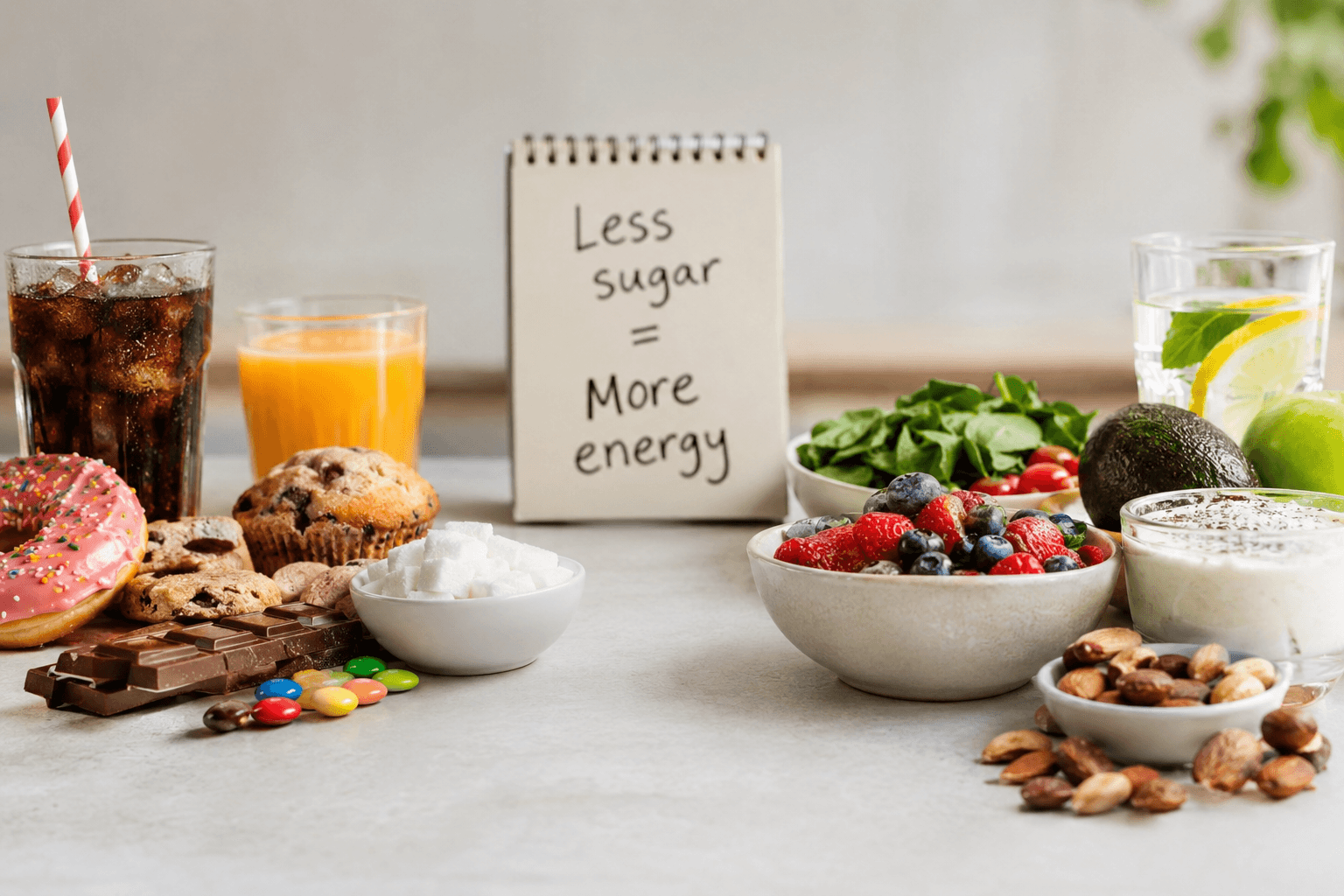
If you stop eating sugar, you may notice changes in your appetite, energy, cravings, and even your body weight. But there is an important distinction: stopping added sugar is not the same as stopping all sugar.
Fruit, vegetables, milk, and yogurt naturally contain sugars along with nutrients such as fiber, protein, vitamins, and minerals. The bigger dietary target is usually added and free sugars found in foods such as sweets, soft drinks, desserts, sugary breakfast cereals, sauces, and many processed foods.
So what actually happens when you stop eating added sugar?
The answer depends on how much sugar you were eating before, what you replace it with, and your overall diet.
Here is what you can expect—from the first few days to several weeks and beyond.
What Happens When You Stop Eating Sugar?
When you significantly reduce added sugar, several things can happen:
- You may experience fewer sugar cravings.
- Your appetite may become easier to control.
- Your calorie intake may decrease.
- Your blood glucose fluctuations may become smaller.
- You may lose weight if you were previously consuming excess calories.
- Your diet may become more nutrient-dense.
- Your taste preferences may gradually change.
- You may have more stable energy throughout the day.
However, you don’t need to eliminate every gram of sugar from your diet to experience these benefits.
For most people, reducing added sugar is a more realistic and sustainable goal.
What Happens in the First 24 Hours Without Added Sugar?
The first day may not feel dramatically different.
If you normally consume a lot of sugary foods and drinks, however, you may notice that something is missing.
For example, if your usual breakfast contains sugary cereal, you drink a sweetened coffee, and you regularly have soda or snacks during the day, removing those foods can make your total calorie and carbohydrate intake substantially lower.
You might experience:
- Hunger at your usual snack times
- Cravings for sweets
- A desire for something sweet after meals
- Slight irritability
- The feeling that food is less satisfying
These effects aren’t necessarily caused by your body “detoxing from sugar.”
Instead, your eating habits and expectations are changing.
If you normally eat something sweet every afternoon, your brain and routine may simply be expecting it.
Days 2–3: Sugar Cravings May Be Noticeable
For many people, the first few days are the most difficult.
This is particularly true if you previously consumed large amounts of sugary foods or drinks.
You may find yourself thinking about:
“Just one cookie.”
Or perhaps you suddenly notice how often sugar appears in your normal diet.
Breakfast cereal, flavored yogurt, granola, ketchup, salad dressings, protein bars, sauces and drinks can all contribute added or free sugars.
Why do cravings happen?
Sweet foods can be highly rewarding and easy to consume in large quantities.
If you repeatedly eat something sweet in a particular situation—for example, chocolate while watching television—your brain can begin to associate that situation with the food.
Removing the food doesn’t immediately remove the habit.
This is one reason that changing your environment can be more effective than relying entirely on willpower.
Days 4–7: Your Appetite May Start to Change
After several days of eating less added sugar, some people notice that cravings become less intense.
You may also discover that foods you previously considered “not sweet enough” taste different.
An apple, berries, or plain Greek yogurt may begin to taste surprisingly sweet.
This happens because your taste preferences can adapt.
But there is another important factor:
What replaces the sugar matters.
If you remove cookies but replace them with large amounts of refined carbohydrates, chips, or other highly processed foods, you may not notice much improvement.
On the other hand, replacing sugary snacks with foods containing protein, fiber, and healthy fats can make it easier to control hunger.
For example:
Instead of:
Cookies + sweetened coffee
Try:
Greek yogurt + berries + nuts
The second option provides substantially more protein and nutrients while still allowing some natural sweetness.
What Happens to Your Blood Sugar?
Reducing added sugar can reduce the amount of rapidly absorbed carbohydrate in your diet.
This can be particularly relevant when you replace sugary drinks and refined foods with meals containing protein, fiber, vegetables, and minimally processed carbohydrates.
However, eating sugar doesn’t automatically cause a dangerous blood sugar spike in everyone.
Your response depends on:
- The amount of carbohydrate
- The type of food
- Fiber content
- Protein and fat in the meal
- Physical activity
- Your individual metabolism
- Whether you have diabetes or insulin resistance
So it is more accurate to say that reducing foods high in added sugar can improve the overall quality of your diet, rather than claiming that eliminating sugar automatically “balances your blood sugar.”
Will I Lose Weight If I Stop Eating Sugar?
Possibly—but sugar itself isn’t uniquely responsible for weight gain.
Weight loss primarily depends on your overall energy balance over time.
If eliminating sugary foods reduces your calorie intake, you may lose weight.
This is particularly easy to achieve by removing sugary drinks.
Consider a person drinking two cans of regular soda every day.
Depending on the product and serving size, those drinks can contribute several hundred calories per day without providing much satiety.
Replacing them with water, sparkling water, or unsweetened tea can therefore make a significant difference over time.
The important point:
You don’t lose weight simply because sugar has been removed.
You lose weight when your overall calorie intake becomes lower than your energy expenditure over time.
What Happens After 2–4 Weeks?
This is where some of the more noticeable changes may appear.
If you have consistently reduced added sugar, you may find:
1. Cravings are easier to manage
You may no longer feel that you need something sweet after every meal.
2. Your palate changes
Foods can start tasting sweeter naturally.
3. Your calorie intake may be lower
Especially if you previously consumed a lot of sweets, desserts, sugary drinks, or sweet snacks.
4. Your diet may contain more nutritious foods
If you replace sugary foods with fruit, vegetables, whole grains, legumes, nuts, dairy, eggs, fish, or lean meat.
5. Your weight may change
If reducing sugar has created a sustained calorie deficit.
Does Stopping Sugar Give You More Energy?
This is one of the most common claims you’ll see online.
The reality is more complicated.
Sugar provides energy because carbohydrates are an energy source. Removing sugar doesn’t magically give your body more energy.
However, replacing a diet high in sugary foods with balanced meals may help some people experience more consistent energy levels.
For example, a breakfast consisting mainly of sugary cereal may leave you hungry again relatively quickly.
A breakfast containing:
- Greek yogurt
- berries
- nuts
- seeds
- eggs
- whole grains
can provide a combination of protein, fiber, fat, and carbohydrates that may be more filling.
So the benefit isn’t necessarily “no sugar = more energy.”
It is often:
better food choices → better satiety → more stable eating patterns.
What Happens to Your Teeth?
This is one area where reducing added sugar has a particularly clear benefit.
Frequent consumption of free sugars contributes to dental caries because oral bacteria metabolize sugars and produce acids that can damage tooth enamel.
Reducing sugary snacks and drinks—and particularly reducing how frequently you consume them—can therefore help protect your teeth.
This doesn’t mean that eating fruit is equivalent to drinking soda.
Whole fruit contains water, fiber, and other nutrients and is generally much less concerning for dental health than frequent consumption of sugary drinks and sticky sweets.
Do You Get Sugar Withdrawal?
You may hear people describe headaches, fatigue, irritability, or brain fog as “sugar withdrawal.”
There is an important distinction here.
Sugar isn’t generally considered to produce a classic physiological withdrawal syndrome in the same way as substances such as nicotine or alcohol.
However, people who dramatically change their diet can experience unpleasant symptoms.
For example, if someone suddenly removes sugary drinks, snacks, and large amounts of refined carbohydrate while also eating substantially fewer calories, they may experience:
- Headaches
- Hunger
- Irritability
- Fatigue
- Difficulty concentrating
These symptoms can have multiple causes.
If you are also reducing total carbohydrate intake substantially—for example, when starting a ketogenic diet—the initial symptoms may have additional explanations related to the dietary change.
What About Fruit? Do I Need to Stop Eating Fruit?
No.
This is one of the biggest misconceptions about “quitting sugar.”
Fruit contains naturally occurring sugars, but whole fruit also provides:
- Fiber
- Vitamins
- Minerals
- Water
- Polyphenols and other plant compounds
Whole fruit is therefore very different from foods containing large amounts of added sugar.
You don’t need to eliminate apples, oranges, berries, bananas, or other whole fruits simply because they contain sugar.
In most cases, whole fruit can comfortably be part of a healthy diet.
What About Milk and Yogurt?
Milk and unsweetened yogurt naturally contain lactose, which is a type of sugar.
That doesn’t make them equivalent to a sugary dessert.
For example, plain Greek yogurt can provide substantial amounts of protein and calcium while containing naturally occurring lactose.
The ingredient list and nutrition label can help you distinguish between:
Plain yogurt
and
Flavored yogurt with added sugar.
This distinction is particularly useful when shopping.
What Foods Should You Avoid If You Want to Reduce Added Sugar?
You don’t necessarily have to eliminate these foods completely, but they are common sources of added sugar:
- Soft drinks
- Energy drinks
- Candy
- Cookies
- Cakes
- Pastries
- Ice cream
- Sugary breakfast cereals
- Sweetened yogurt
- Chocolate
- Sweetened coffee drinks
- Some sauces
- Sweetened drinks
- Many packaged snacks
One of the easiest places to start is liquid sugar.
Drinks often provide calories without creating as much fullness as solid food.
What Should You Eat Instead?
Instead of simply asking:
“What can I eat without sugar?”
ask:
“What can I eat that keeps me full and nourished?”
Good options include:
Protein
- Eggs
- Chicken
- Fish
- Greek yogurt
- Cottage cheese
- Lean beef
- Tofu
- Legumes
High-fiber foods
- Vegetables
- Berries
- Apples
- Beans
- Lentils
- Oats
- Whole grains
- Nuts and seeds
Healthy fats
And don’t forget that water, unsweetened tea, and black coffee can replace many sugary drinks.
Does Stopping Sugar Improve Your Skin?
You will often see claims that eliminating sugar will automatically give you clearer, younger-looking skin.
The evidence is more nuanced.
Diet can influence skin health, and some research has associated diets with a high glycemic load with acne in some people.
However, it would be an exaggeration to claim that stopping sugar will automatically clear your skin or reverse aging.
Skin health depends on many factors, including:
- Genetics
- Age
- Hormones
- Sun exposure
- Sleep
- Smoking
- Overall diet
- Skin care
- Individual health
Reducing excessive added sugar can be a sensible part of an overall healthy diet, but it isn’t a magic anti-aging treatment.
What Happens If You Stop Sugar for a Year?
If you maintain a lower-added-sugar diet for a year, the long-term effects depend heavily on what your overall diet looks like.
Simply replacing sugar with highly processed foods isn’t necessarily an improvement.
But if reducing added sugar leads you to eat more:
- Vegetables
- Fruit
- Whole grains
- Legumes
- Fish
- Lean protein
- Nuts and seeds
- Minimally processed foods
then the overall nutritional quality of your diet may improve considerably.
And if reducing sugary foods helps you maintain a healthier body weight, that can have additional health benefits.
Do You Need to Completely Quit Sugar?
For most people, no.
A healthier goal is often to reduce added and free sugars rather than attempting to eliminate every source of sugar.
This allows room for naturally occurring sugars in nutritious foods such as fruit and dairy.
It also makes your diet much easier to maintain long term.
You can still occasionally enjoy a dessert or piece of chocolate without undoing your entire diet.
The bigger picture matters far more than one food.
How to Stop Eating Added Sugar Without Feeling Miserable
Instead of trying to eliminate everything overnight, try these steps.
Step 1: Remove sugary drinks
Start with soda, sweetened coffee, energy drinks, and other sugary beverages.
Step 2: Check breakfast
Look at cereals, flavored yogurts, spreads, and breakfast drinks.
Step 3: Increase protein
Protein can make meals substantially more filling.
Step 4: Eat more fiber
Vegetables, fruit, legumes, whole grains, nuts, and seeds can help with satiety.
Step 5: Keep healthy snacks available
Try:
- Greek yogurt
- Fruit
- Nuts
- Boiled eggs
- Cottage cheese
Step 6: Don’t rely entirely on willpower
If a large bag of cookies is sitting on your desk, you don’t have to prove your discipline by staring at it all day.
Make the healthier choice the easier choice.
The Bottom Line: What Happens When You Stop Eating Sugar?
Stopping or significantly reducing added sugar can lead to fewer cravings, lower calorie intake, changes in taste preferences, and potentially weight loss—particularly if sugary drinks and high-calorie snacks were a significant part of your diet.
But you don’t need to fear all sugar.
Fruit isn’t candy. Milk isn’t soda. And carbohydrates aren’t automatically unhealthy.
The most useful distinction is between naturally occurring sugars in nutritious foods and added/free sugars in highly processed foods and drinks.
Rather than asking whether you should “quit sugar forever,” a better question is:
How much added sugar is in my diet, where is it coming from, and what can I replace it with?
That approach is more practical—and much easier to maintain for the long term.
FAQ: What Happens When You Stop Eating Sugar?
How long does it take to stop craving sugar?
There is no universal timeline. Some people notice reduced cravings within several days, while others take weeks. Habits, food preferences, sleep, stress, and the amount of sugar previously consumed can all influence the experience.
Will I lose belly fat if I stop eating sugar?
Reducing sugar can contribute to fat loss if it reduces your overall calorie intake. However, your body doesn’t selectively burn belly fat simply because you stop eating sugar.
Can I eat fruit if I’m quitting sugar?
Yes. Whole fruit contains natural sugars but also provides fiber, vitamins, minerals, water, and other beneficial compounds.
Is honey healthier than sugar?
Honey is still a source of free sugar. Although it contains small amounts of other compounds, it shouldn’t be considered a free pass to consume unlimited amounts.
What is the easiest sugar to eliminate?
For many people, sugary drinks are the easiest place to start because they can contain substantial amounts of sugar without providing much satiety.
Can I eat sugar occasionally?
Yes. A healthy diet doesn’t have to be perfect. Occasional desserts or sweets can fit into an overall balanced eating pattern.