If you’re trying to lose weight, one of the biggest challenges isn’t knowing what you should eat—it’s dealing with hunger.
The good news is that you don’t necessarily need to eat tiny portions or rely on willpower all day. Choosing foods that are naturally filling can make it much easier to eat fewer calories while still enjoying satisfying meals.
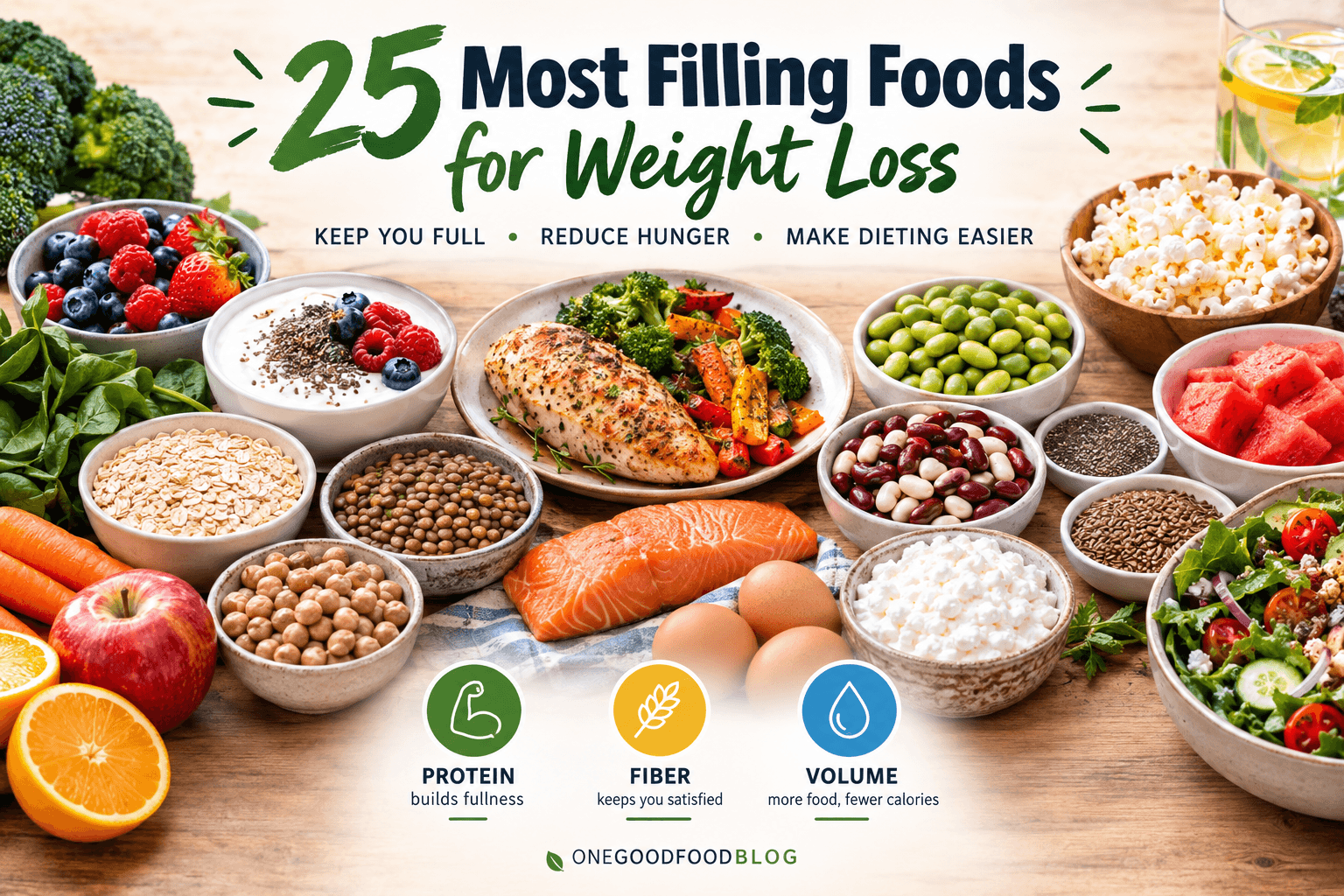
The most filling foods for weight loss tend to have one or more of three characteristics:
- They are high in protein
- They are high in fiber
- They contain a lot of water and volume for relatively few calories
Protein can increase feelings of fullness, while dietary fiber can help increase post-meal satiety and reduce subsequent hunger. Foods with a lower energy density can also allow you to eat a larger physical portion without consuming as many calories.
Here are 25 of the most filling foods to include in a weight-loss diet.
1. Potatoes
Potatoes have an undeserved reputation as a food that causes weight gain.
Plain boiled or baked potatoes can actually be extremely filling. They contain substantial amounts of water and carbohydrates while providing relatively few calories for their volume.
The important distinction is how you prepare them.
A boiled or baked potato is very different from deep-fried fries covered in oil.
Best way to eat them for weight loss:
- Boiled
- Baked
- Air-fried with a small amount of oil
- Served with lean protein and vegetables
Try a baked potato with cottage cheese, tuna or Greek yogurt instead of butter and cheese.
2. Eggs
Eggs are one of the easiest high-protein foods to use when you’re trying to control hunger.
A large egg provides roughly 6 grams of protein and is highly versatile. Eggs can form the basis of breakfast, lunch or dinner.
Try combining eggs with vegetables to increase the volume of your meal without dramatically increasing calories.
Filling meal idea:
3 eggs + mushrooms + spinach + tomatoes
That’s considerably more filling than a breakfast based around sugary cereal or pastries.
3. Greek Yogurt
Greek yogurt is particularly useful for weight loss because it combines protein with a creamy texture.
Choose plain Greek yogurt rather than heavily sweetened flavored versions.
For an even more filling breakfast or snack, add:
- Berries
- Chia seeds
- Ground flaxseed
- Cinnamon
- A small amount of nuts
If you’re watching calories, pay attention to the fat content. Full-fat Greek yogurt can be nutritious but contains considerably more calories than low-fat varieties.
4. Oatmeal
Oats are rich in soluble fiber, particularly beta-glucan.
A bowl of oatmeal can provide substantial volume and can be made even more filling by adding protein.
Instead of eating a small bowl of plain oats, try:
Oats + Greek yogurt + berries + chia seeds
This gives you a combination of fiber, protein and volume.
Weight-loss tip
Avoid turning oatmeal into dessert by adding large amounts of honey, sugar, chocolate and nut butter. Those ingredients can quickly turn a relatively low-calorie breakfast into a very calorie-dense meal.
5. Lentils
Lentils are an excellent combination of protein, fiber and carbohydrates.
They are particularly useful if you want plant-based foods that keep you full for a long time.
Use them in:
- Lentil soup
- Salads
- Curries
- Stews
- Vegetable bowls
Lentils also work well as a replacement for part of the meat in dishes such as chili.
6. Beans
Black beans, kidney beans, cannellini beans and other beans can be extremely satisfying.
They provide both protein and fiber, making them a useful food for appetite control.
Try adding beans to:
- Chili
- Tacos
- Salads
- Soups
- Burrito bowls
Beans are particularly useful because they can replace some of the more calorie-dense ingredients in a meal while increasing its volume.
7. Chicken Breast
Chicken breast is one of the classic high-protein foods for weight loss.
It provides a lot of protein relative to its calorie content and can be used in hundreds of different meals.
The key is to remember that the calories can increase dramatically depending on what you add during cooking.
A grilled chicken breast with vegetables is very different from breaded chicken fried in oil.
Simple combination:
Chicken breast + roasted vegetables + potatoes
This gives you protein, fiber, carbohydrates and plenty of food volume.
8. Lean Beef
You don’t have to eliminate red meat to lose weight.
Lean cuts of beef can provide plenty of protein along with important nutrients such as iron, zinc and vitamin B12.
Choose leaner cuts more often and keep an eye on portion size.
A steak can be part of a weight-loss diet—the calories simply need to fit within your overall intake.
9. Fish
Fish is another excellent source of protein.
White fish such as cod, haddock and pollock can provide a particularly large serving for relatively few calories.
Fatty fish such as salmon, sardines and mackerel contain more calories because they contain more fat, but they also provide valuable omega-3 fatty acids.
For maximum volume:
Try grilled white fish with a huge serving of vegetables and a moderate portion of potatoes.
10. Cottage Cheese
Cottage cheese is one of the simplest high-protein foods for people trying to lose weight.
It can be eaten on its own, mixed with fruit or used as a savory ingredient.
Try cottage cheese with:
For an even higher-protein snack, combine cottage cheese with a boiled egg.
11. Popcorn
Surprisingly, popcorn can be an excellent weight-loss snack.
The important word is plain.
Air-popped popcorn contains a lot of volume relative to its calories.
The problem is what commonly gets added to it.
Large quantities of butter, oil, caramel or sugar can transform popcorn from a relatively light snack into a calorie-dense one.
Better choice:
Air-popped popcorn + a small amount of salt or seasoning.
It can give you a surprisingly large bowl to eat while watching television.
12. Berries
Strawberries, raspberries, blueberries and blackberries contain plenty of water and fiber while providing relatively few calories.
They are an excellent way to add sweetness to meals without relying on highly processed desserts.
Try berries with:
Greek yogurt + cinnamon + a small amount of chopped nuts
This makes an excellent filling breakfast or dessert.
13. Apples
Apples are particularly useful as a portable snack.
The combination of water, fiber and the physical act of chewing can make an apple considerably more satisfying than drinking apple juice.
Eat the whole fruit rather than drinking the juice.
Simple snack:
1 apple + Greek yogurt
The fruit provides fiber and volume while the yogurt adds protein.
14. Oranges
Oranges are another high-volume fruit.
Because they contain a lot of water, a whole orange provides substantial physical volume for relatively few calories.
Whole oranges are generally more filling than orange juice because you’re consuming the fruit’s fiber and chewing the food.
15. Broccoli
Broccoli is one of the easiest vegetables to use when you want to make a meal larger without adding many calories.
It provides fiber, water and a variety of micronutrients.
Don’t think of vegetables as something you have to eat on the side.
Instead, make them a major part of the meal.
For example:
200 g chicken + 300 g broccoli + 250 g potatoes
is a much more substantial meal than simply eating chicken with a small side dish.
16. Cauliflower
Cauliflower is another excellent high-volume vegetable.
It can be:
- Roasted
- Steamed
- Mashed
- Added to soups
- Turned into cauliflower rice
Cauliflower rice can be particularly useful if you enjoy large portions but are trying to reduce the calorie density of your meals.
17. Spinach
Spinach provides plenty of food volume for very few calories.
You can add large amounts to:
- Omelets
- Soups
- Curries
- Salads
- Smoothies
- Pasta dishes
One useful weight-loss strategy is to add vegetables to meals you already enjoy rather than completely changing your diet.
18. Carrots
Raw carrots are an excellent snack when you want something crunchy.
They require chewing and provide fiber and water.
Try pairing carrots with a protein-rich dip such as Greek-yogurt dip or cottage cheese.
This creates a more balanced snack than eating carrots alone.
19. Soup
Soup deserves a place on this list because it can combine water, vegetables, protein and fiber into one filling meal.
A vegetable and chicken soup, for example, can provide a large bowl of food without requiring large amounts of calorie-dense ingredients.
Be careful with cream-based soups, however.
Cream, cheese and large amounts of oil can dramatically increase the calorie content.
A filling weight-loss soup could contain:
- Chicken
- Lentils or beans
- Carrots
- Celery
- Tomatoes
- Onions
- Cabbage
- Herbs and spices
20. Edamame
Edamame is a particularly useful food because it provides both protein and fiber.
Unlike many traditional snack foods, edamame can provide substantial nutrition while still being relatively satisfying.
Use it as:
- A snack
- A salad ingredient
- A side dish
- Part of a rice bowl
Frozen edamame is also convenient because it can be prepared in minutes.
21. Chia Seeds
Chia seeds contain substantial amounts of fiber and can absorb liquid, making them useful for creating filling meals and snacks.
Try making chia pudding with:
Chia seeds + milk + Greek yogurt + berries
Remember, however, that chia seeds are not low-calorie. They’re nutritious but energy-dense, so portion size still matters.
A tablespoon or two can go a long way.
22. Flaxseed
Ground flaxseed provides fiber and healthy fats.
It’s easy to add to:
- Greek yogurt
- Oatmeal
- Smoothies
- Salads
- Homemade protein bowls
Ground flaxseed is generally easier to incorporate into meals than whole flaxseed.
Again, portion size matters because seeds contain a significant amount of fat and therefore calories.
23. Air-Popped Popcorn
Yes, popcorn deserves another mention—but this time as a practical snacking strategy.
If your biggest problem with dieting is evening snacking, replacing calorie-dense snacks with a large bowl of air-popped popcorn can make a significant difference to the amount of food you can eat for a given calorie budget.
Instead of:
Chocolate + cookies + chips
try:
Large bowl of popcorn + Greek yogurt + fruit
The goal isn’t to eliminate snacks. It’s to make your snacks work harder for you.
24. Watermelon
Watermelon contains a very high proportion of water.
That means you can eat a large physical serving without consuming a huge number of calories.
It’s particularly useful during warm weather when you’re craving something cold and sweet.
Try combining watermelon with a protein source such as cottage cheese or Greek yogurt if you want it to function as a more substantial snack.
25. Vegetable Salads
A large salad can be one of the most filling meals you can build—provided you don’t accidentally turn it into a calorie bomb.
Start with a large amount of:
- Lettuce
- Cucumber
- Tomatoes
- Peppers
- Carrots
- Cabbage
- Radishes
Then add a protein source:
- Chicken
- Tuna
- Eggs
- Cottage cheese
- Beans
- Salmon
Finally, add a measured amount of dressing.
The dressing is important because a few generous pours of olive oil can contain hundreds of calories.
What Makes a Food Filling?
The most filling foods generally work through several mechanisms.
Protein
Protein tends to be particularly effective at increasing fullness compared with carbohydrate and fat. Research has found that protein intake can reduce hunger and increase feelings of fullness, although the effects of longer-term high-protein diets are more complicated than the short-term appetite response.
Good protein choices include:
- Eggs
- Chicken
- Fish
- Greek yogurt
- Cottage cheese
- Lean beef
- Lentils
- Beans
- Edamame
Fiber
Fiber can help increase post-meal satiety and reduce hunger later.
Good sources include:
- Beans
- Lentils
- Oats
- Vegetables
- Berries
- Apples
- Chia seeds
- Flaxseed
Research reviews have found that increasing dietary fiber can increase post-meal satiety and reduce subsequent hunger in many circumstances.
Food Volume
Another important concept is energy density.
Foods containing lots of water and fiber tend to provide more physical volume for fewer calories.
That means you can build a large plate without necessarily consuming a large amount of energy.
This is one reason vegetables, fruit, soups and other high-volume foods can be useful during weight loss.
The Best Strategy: Combine Protein + Fiber + Volume
You don’t have to choose between protein foods and high-volume foods.
The most practical approach is to combine them.
For example:
Breakfast
Greek yogurt + berries + oats + ground flaxseed
Lunch
Large chicken salad + beans + vegetables
Dinner
Lean beef + potatoes + broccoli + carrots
Snack
Apple + cottage cheese
This combination gives you multiple sources of satiety in every meal.
5 Filling Meal Combinations for Weight Loss
If you’re not sure how to put these foods together, try these combinations.
1. High-Protein Breakfast
3 eggs + spinach + mushrooms + tomatoes
High in protein and packed with vegetables.
2. Protein Yogurt Bowl
Greek yogurt + berries + oats + chia seeds
A simple combination of protein, fiber and volume.
3. Chicken Potato Bowl
Chicken breast + boiled potatoes + broccoli + carrots
A very large meal can be created without relying heavily on calorie-dense sauces.
4. Lentil Soup
Lentils + chicken + tomatoes + carrots + celery + onions
Protein, fiber and plenty of volume in one bowl.
5. Tuna Salad
Tuna + lettuce + cucumber + tomatoes + peppers + boiled egg
Add a measured amount of dressing and you’ve got a substantial low-energy-density meal.
What About Nuts and Avocado?
You may notice that foods such as nuts and avocado aren’t near the top of this list.
That’s not because they’re unhealthy.
They’re highly nutritious foods containing healthy fats, fiber and other nutrients.
The problem is calorie density.
A small amount of nuts or avocado contains considerably more calories than a large amount of vegetables.
For weight loss, portion control matters.
You can absolutely eat nuts and avocado while losing weight—just don’t assume that because a food is healthy, you can eat unlimited quantities of it.
Are Carbs Bad for Weight Loss?
No.
Foods such as potatoes, oats, beans, lentils and fruit can all fit into a weight-loss diet.
The bigger issue is the total amount of energy you consume over time.
Some carbohydrate-rich foods can actually be extremely useful for weight loss because they provide a combination of water, fiber and volume.
Potatoes are a particularly good example.
The difference between a boiled potato and a large serving of deep-fried fries isn’t simply that one is a “carb” and the other isn’t. The preparation method changes the calorie density substantially.
Can You Eat High-Fat Foods and Still Lose Weight?
Yes.
Weight loss does not require eliminating dietary fat.
However, fat contains more calories per gram than protein or carbohydrate. That means calorie-dense foods such as oils, nuts, cheese, butter and fatty meats can make it easier to consume large amounts of energy without eating much physical food.
This doesn’t mean you should avoid them.
It means that portion size matters.
A useful approach is to combine smaller amounts of calorie-dense foods with large portions of vegetables and a good protein source.
The 25 Most Filling Foods for Weight Loss: Quick List
| # | Food | Why It’s Filling |
|---|---|---|
| 1 | Potatoes | High volume and water |
| 2 | Eggs | Protein and nutrients |
| 3 | Greek yogurt | High in protein |
| 4 | Oatmeal | Fiber and volume |
| 5 | Lentils | Protein + fiber |
| 6 | Beans | Protein + fiber |
| 7 | Chicken breast | High protein |
| 8 | Lean beef | Protein + nutrients |
| 9 | Fish | Protein |
| 10 | Cottage cheese | High protein |
| 11 | Popcorn | High volume |
| 12 | Berries | Water + fiber |
| 13 | Apples | Fiber + water |
| 14 | Oranges | Water + fiber |
| 15 | Broccoli | High volume |
| 16 | Cauliflower | High volume |
| 17 | Spinach | Very low energy density |
| 18 | Carrots | Fiber + crunch |
| 19 | Vegetable soup | Water + volume |
| 20 | Edamame | Protein + fiber |
| 21 | Chia seeds | High fiber |
| 22 | Flaxseed | Fiber + healthy fats |
| 23 | Air-popped popcorn | Large volume |
| 24 | Watermelon | Very high water content |
| 25 | Vegetable salads | High volume |
The Bottom Line
The best foods for weight loss aren’t necessarily the foods with the fewest calories.
Instead, look for foods that help you eat satisfying portions while controlling your total calorie intake.
A particularly useful formula is:
Protein + fiber + food volume = a more satisfying meal
Build your meals around foods such as chicken, fish, eggs, Greek yogurt, beans, lentils and cottage cheese. Then add plenty of vegetables, fruit and other high-volume foods.
You don’t need to live on salads or constantly feel hungry to lose weight.
The goal is to make your diet more filling, not simply smaller.
And that may be one of the most practical ways to make a calorie deficit easier to maintain over the long term.