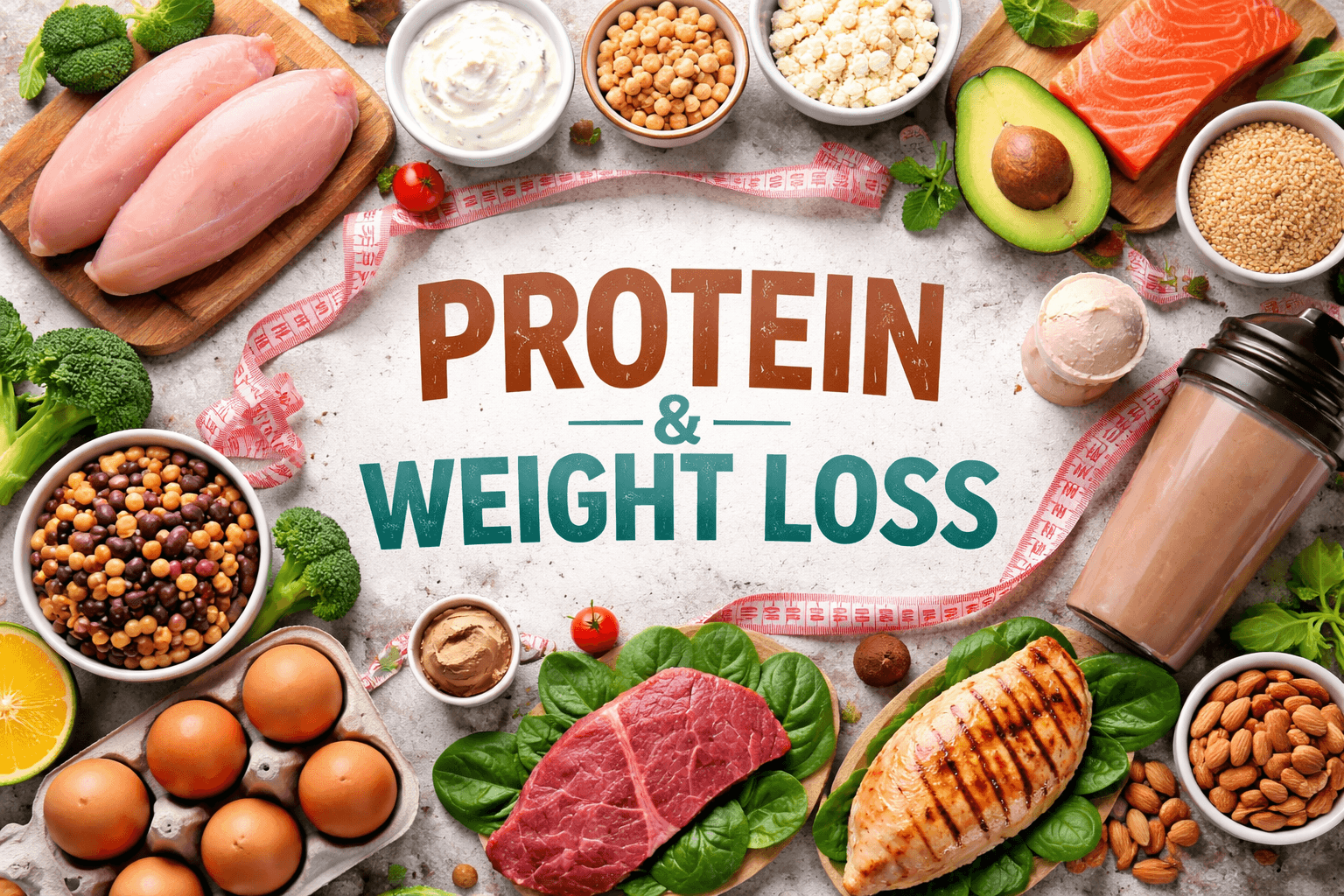
Protein is one of the most important nutrients for weight loss. It plays a central role in appetite regulation, muscle preservation, metabolic health, and long-term fat loss success. Yet many people underestimate how much protein they need—or which protein sources are best—when trying to lose weight.
In this post we will explain why protein is critical for weight loss, how it affects metabolism and hunger hormones, and provides a detailed breakdown of the best animal-based and plant-based protein sources to include in a weight-loss diet.
Why Protein Is Essential for Weight Loss
Protein and Satiety (Feeling Full)
Protein is the most satiating macronutrient. Compared to carbohydrates and fats, protein has a stronger effect on appetite hormones:
- Reduces ghrelin, the primary hunger hormone
- Increases peptide YY (PYY) and GLP-1, hormones that promote fullness
- Slows gastric emptying, keeping you full longer
Higher protein intake consistently leads to reduced calorie intake without intentional restriction, making it one of the most effective tools for sustainable weight loss.
Protein and Metabolism
The Thermic Effect of Protein
Protein has a higher thermic effect of food (TEF) than carbohydrates or fats. This means your body burns more calories digesting protein.
Approximate thermic effect:
- Protein: 20–30%
- Carbohydrates: 5–10%
- Fat: 0–3%
This metabolic advantage may seem small per meal, but over time it contributes meaningfully to fat loss.
Protein and Muscle Preservation During Weight Loss
Weight loss without sufficient protein often leads to loss of lean muscle mass, which can slow metabolism and increase fat regain.
Adequate protein intake:
- Preserves lean muscle
- Supports resting metabolic rate
- Improves body composition (fat loss vs weight loss)
This is especially important during calorie restriction and intermittent fasting.
How Much Protein Do You Need for Weight Loss?
Optimal Protein Intake for Fat Loss
Research suggests higher protein intakes are beneficial during weight loss.
General guidelines:
- 1.6–2.2 g of protein per kg of body weight
- Or 25–35% of total daily calories from protein
Example:
- A 70 kg (154 lb) person → 112–154 g protein/day
Protein needs increase with:
- Resistance training
- Calorie restriction
- Age
- Lean body mass goals
Protein Timing: Does It Matter?
Protein timing is less important than total daily intake, but spreading protein across meals improves satiety and muscle protein synthesis.
For weight loss:
- Aim for 25–40 g of protein per meal
- Prioritize protein in the first meal of the day (breakfast or first post-fast meal)
Best Animal-Based Protein Sources for Weight Loss
Animal proteins are considered complete proteins, meaning they contain all essential amino acids.
Eggs
Why Eggs Are Excellent for Weight Loss
- High biological value
- Rich in leucine (supports muscle)
- Highly satiating
- Affordable and versatile
One large egg contains:
- ~6–7 g protein
- ~70 calories
Contrary to outdated beliefs, whole eggs are safe for most people and support appetite control.
Best ways to eat eggs for weight loss:
- Boiled
- Poached
- Scrambled with vegetables
- Omelets with lean protein additions
Greek Yogurt (Plain, Unsweetened)
Greek yogurt is one of the best high-protein foods for fat loss.
Benefits:
- High protein density
- Probiotic support for gut health
- Excellent satiety
Per 170 g (6 oz) serving:
- 15–18 g protein
- Low calorie if non-fat or low-fat
Choose plain versions to avoid added sugars.
Cottage Cheese
Cottage cheese is rich in casein protein, which digests slowly and promotes prolonged fullness.
Benefits:
- High protein
- Low calorie
- Ideal for late meals or breakfast
Per ½ cup:
- ~12–14 g protein
- ~90 calories
Lean Poultry (Chicken & Turkey)
Lean poultry provides high protein with minimal fat.
Best options:
- Chicken breast
- Turkey breast
Per 100 g cooked chicken breast:
- ~31 g protein
- ~165 calories
Ideal for meal prep and calorie control.
Fish and Seafood
Fatty Fish (Salmon, Sardines)
- High protein
- Omega-3 fatty acids
- Anti-inflammatory effects
Lean Fish (Cod, Tilapia)
- Very low calorie
- High protein density
Fish supports weight loss by improving insulin sensitivity and metabolic health.
Lean Red Meat (In Moderation)
Lean cuts such as:
- Sirloin
- Tenderloin
- Eye of round
Provide:
- Complete protein
- Iron
- Vitamin B12
Best consumed in moderation and prepared without added fats.
Best Plant-Based Protein Sources for Weight Loss
Plant proteins can be highly effective for weight loss when properly combined.
Tofu and Tempeh
Soy-based proteins are among the highest-quality plant proteins.
Benefits:
- Complete amino acid profile
- Low carbohydrate
- Highly versatile
Tempeh offers additional fiber and gut health benefits.
Legumes (Lentils, Beans, Chickpeas)
Legumes combine protein and fiber, making them excellent for appetite control.
Benefits:
- Improve satiety
- Support gut health
- Stabilize blood sugar
Downside:
- Higher carbohydrate content
- Best portion-controlled for low-carb diets
Edamame
Edamame is a high-protein, low-glycemic legume.
Per cup:
- ~18 g protein
- High fiber
- Minimal processing
Quinoa
Quinoa is a rare complete plant protein.
Benefits:
- Contains all essential amino acids
- Provides fiber and minerals
However, it is calorie-dense and should be portion-controlled.
Protein Powders for Weight Loss
Protein supplements can be helpful when whole-food intake is insufficient.
Best Protein Powders:
- Whey isolate (lean, fast-digesting)
- Casein (slow-digesting)
- Plant blends (pea + rice)
Avoid powders with:
- Added sugars
- Artificial fillers
- Excess calories
Protein shakes are most effective as meal replacements or post-workout nutrition.
Protein Quality: What Matters Most?
Key factors:
- Amino acid profile
- Digestibility
- Leucine content
- Satiety response
Animal proteins generally rank higher, but well-planned plant-based diets can achieve similar results.
Common Protein Mistakes That Stall Weight Loss
- Relying on low-protein breakfasts
- Choosing processed “protein” foods
- Underestimating portion sizes
- Skipping protein during intermittent fasting windows
Best Protein Sources for Weight Loss (Quick Summary Table)
| Protein Source | Protein Density | Satiety | Best Use |
| Eggs | High | High | Breakfast |
| Greek yogurt | High | High | Breakfast/snacks |
| Chicken breast | Very high | Moderate | Meals |
| Fish | High | High | Meals |
| Tofu/tempeh | Moderate | Moderate | Plant-based meals |
| Legumes | Moderate | High | Mixed meals |
| Protein powder | Very high | Variable | Convenience |
How Protein Fits Into Intermittent Fasting
For intermittent fasting:
- Prioritize protein in the first meal
- Avoid breaking fasts with refined carbs
- Protein reduces overeating later in the eating window
Final Thoughts: Protein as the Foundation of Weight Loss
Protein is not just another macronutrient—it is the foundation of successful weight loss.
High-protein diets:
- Reduce hunger
- Preserve muscle
- Support metabolism
- Improve adherence
- Enhance body composition